






Biocomposites that combine natural fibres with a binding material are in increasing demand as industries, from construction to infrastructure and urban design, look for more and better ways to build sustainably.
Government policies aimed at reducing carbon emissions and promoting eco-friendly alternatives are also propelling the global biocomposite materials market, which is due to grow from $11.90 billion in 2022 to an impressive $55.93 billion by 2032.
By enabling wood or other plant-based materials that would otherwise be burned or go to landfill to have a second life, industry can help to meet increasingly high-priority corporate, national and international net-zero goals, by incorporating them into project plans.
Promoting a circular economy
However, while environmentally-friendly credentials are important, they aren’t enough on their own. Construction materials must be fit for purpose and competitive. Eco Wall, a first-of-its-kind biocomposite in the UAE, is successfully combining the two.
Using desert palm waste – of which 500,000 tonnes is generated each year in the UAE – its creators can produce a material that is 3X stronger in compression and 6X stronger in flexure than cement, allowing you to reduce the thickness of the material and lower raw material consumption. It also absorbs at least 7X less water than cement.
This high-performance, sustainable building material can be moulded into just about any shape, from tiles and flooring to full-scale facades and even living plant walls – vibrant, oxygen-releasing exteriors to replace grey, concrete walls. Because the panels are modular and lightweight, they can be added to existing buildings or used in new construction.
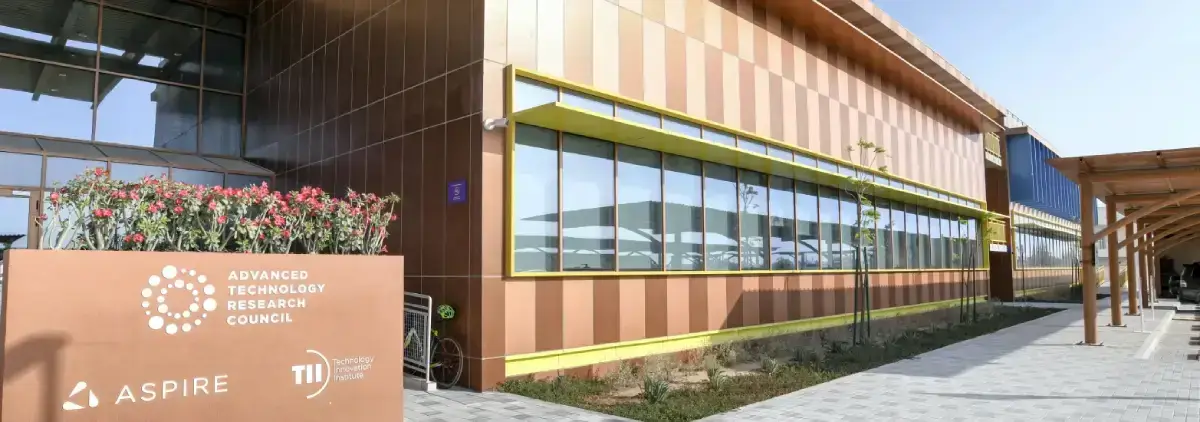
Created by researchers at the Technology Innovation Institute (TII), the biocomposite is not only structurally strong, but solves three environmental challenges at once. It reduces CO2 emissions by replacing cement with a low-carbon alternative. It tackles agricultural waste, giving palm debris a second life, and it supports sustainable building, aligning with the UAE’s Net Zero 2050 Strategy.
The Strategy has identified several ‘enablers’ for empowering the ecosystem required for it to succeed, including the development of new technologies supported by research and development (R&D) that focus on implementing sustainable transportation and green building practices, incorporating nature-based solutions and employing carbon capture technologies.
Although the UAE-based team are currently using locally available palm waste and raw materials to produce the biocomposite, it can be produced using any locally available natural waste. This makes it infinitely flexible and usable in different locations around the world, without the need to transport waste materials or the end product.
With testing complete, the TII team are now preparing for real-world pilot deployments with industry partners.
Commercially viable
What has traditionally held biocomposites back from mainstream use is their cost compared to traditional materials. However, not being bound by standard brick dimensions, by using different breaks and without the need for a cement finish, labour time is reduced, which decreases overall construction time. Or to put it another way, ‘brick for brick,’ a biocomposite might be more expensive, but a whole wall will work out more cost-effective.
With innovations like these hitting the market, there really is little holding biocomposites back from entering the mainstream. If we can replace high-emission materials with more eco-friendly options, it could be a game-changer for modern construction – and our planet.