







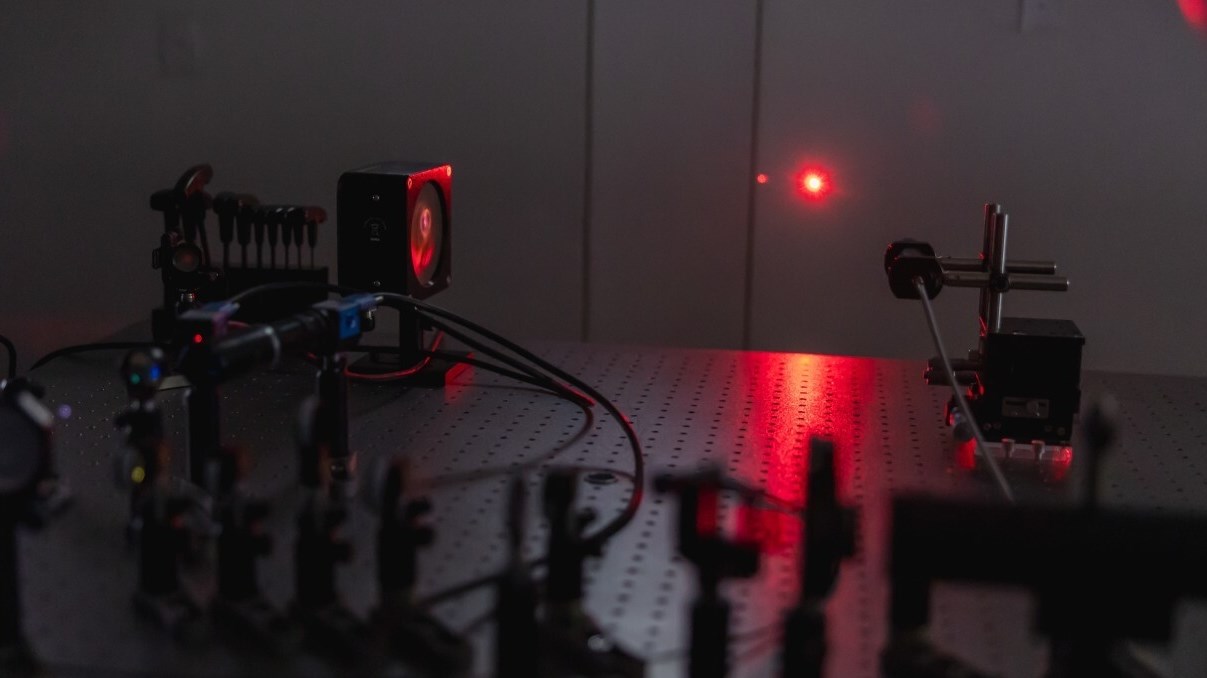
Abu Dhabi researchers are developing a high-intensity laser system that could soon turn clouds into rainfall by replicating the microscopic processes behind raindrop formation.
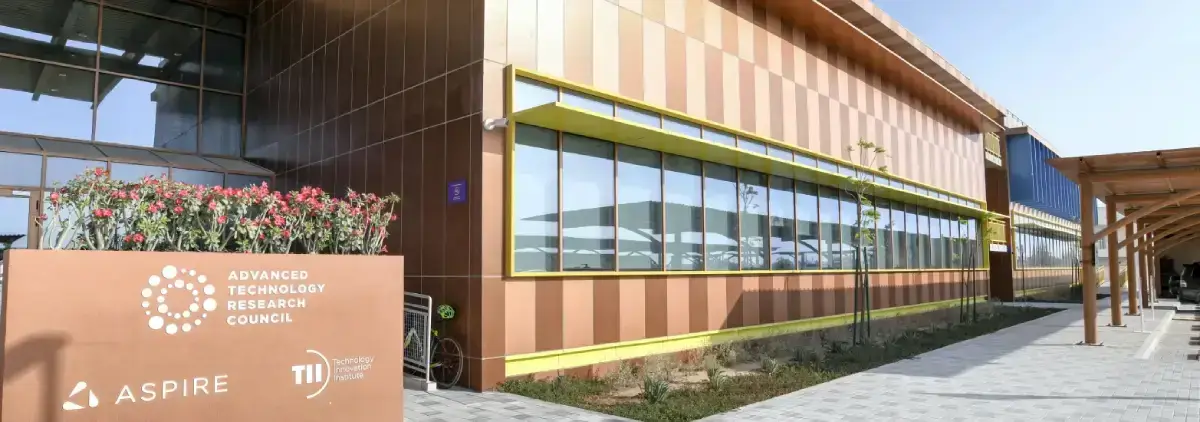
Using concentrated plasma channels, the system promises a cleaner, energy-efficient path to rain enhancement in a region where water is a precious resource. The project is led by a team of researchers, translating physics into real-world applications at the Directed Energy Research Centre (DERC) within the Technology Innovation Institute (TII).
Shamma Al Mazrouei, a senior researcher specialising in laser-matter interaction research, spoke to Aletihad about the experiments bringing cloud physics from the lab into UAE skies.
“The idea is to use ultra-short bursts of light to create plasma channels inside clouds,” she explained.
“These channels produce high-density charged particles, which act as condensation nuclei, leading to raindrop formation.”
With a master’s degree in applied physics and a bachelor’s in Electromechanical Engineering Technology, Al Mazrouei applies both theory and hands-on experimentation to her research.
“I don’t see experiments as isolated physics problems,” she said. “I think in terms of systems and real-world applications.”
At the lab, her day-to-day work involves designing and running experiments to study how high-intensity laser pulses interact with materials and the environment.
“I was drawn to laser matter interaction, because it sits at the intersection of fundamental science and real impact,” she noted.
“This field allows me to contribute to solutions for global challenges, like climate change and water security, while also pushing the boundaries of physics. At TII, our research directly supports national priorities.”
The laser rain project, supported under the UAE Research Program (UAEREP), is currently in the testing phase - slated for completion in 2027.
According to Al Mazrouei, one of the main challenges is controlling laser interactions at extreme intensities, and maintaining beam stability over long distances in turbulent atmospheric conditions.
Mentoring younger researchers, celebrating small milestones, and focusing on the bigger picture of national and global impact keeps her team moving forward.
“Incremental progress is how transformative technologies are built,” Al Mazrouei noted. “I’m also deeply inspired by the vision of the leadership of UAE President His Highness Sheikh Mohamed bin Zayed Al Nahyan, and his strong belief in science and knowledge.”
Commenting on the International Day of Women and Girls in Science, Al Mazrouei encouraged aspiring scientists to pursue their curiosity.
“Science needs perspective,” she noted. “You don’t need to fit a stereotype to belong in physics. You belong the moment you are curious and willing to learn.”
She believes the UAE has created the space for women and girls to “grow, lead and innovate” in scientific fields by ensuring that talent matters more than labels.