






Laser technology could transform rain enhancement and water security
A research project conducted under the supervision of the UAE Research Program for Rain Enhancement Science has reached a scientific breakthrough confirming the feasibility of laser-induced water vapor condensation and is now preparing for field trials in collaboration with international partners.
The project, carried out at the Technology Innovation Institute (TII), in Abu Dhabi, explores how laser beams can be used to stimulate rainfall in the United Arab Emirates. It has achieved a major milestone after laboratory tests verified the possibility of inducing water vapor condensation using laser technology. This development coincides with the completion of the mid-term review by the program’s Strategic Direction Committee of the study being conducted at the institute.
The research focuses on understanding how high-power laser beams influence cloud formation and trigger water droplet generation under controlled conditions.
Researchers are currently preparing to implement field experiments using a mobile, high-power pulsed laser prototype equipped with remote sensing systems that can be deployed across various locations in the UAE.
Expanding the project
The project’s modelling capabilities have also been expanded through collaboration with international partners. Simulations will help recreate weather patterns typical of the UAE, including convective clouds over the Hajar Mountains in Fujairah and summer cloud formations in the Western Region.
The initiative positions the UAE at the forefront of innovation in laser-based rain enhancement and supports national efforts to improve precipitation rates in arid and semi-arid regions. Integrating experimental physics with advanced atmospheric modelling and AI-driven diagnostics is also contributing to the exploration of new approaches to weather modification.
The project team includes Emirati professionals, among them Shamma Al Mazrui, Senior Researcher at the ICT Division, and Reem Al Ameri, Mechanical Engineer at the ICT Division.
USA Patent and Trademark Office
This innovation was filed with the United States Patent and Trademark Office on October 14, 2025, as part of efforts to secure the first joint patent between the Technology Innovation Institute and the National Center of Meteorology.
In a world increasingly challenged by climate change and water scarcity, scientists in the UAE are exploring a radical new approach to rainfall enhancement — using lasers instead of chemicals. Gulf News spoke with experts from the Technology Innovation Institute (TII) about a pioneering project that could redefine how arid regions manage water resources.
The project, titled Laser-based Rain Triggering Demonstrator with Remote Sensing Technology, recently secured a $1.5 million (Dh5,508,750) research grant from the UAE Research Program for Rain Enhancement Science (UAEREP), an initiative under the National Center of Meteorology (NCM), reflecting its potential to address global water challenges through sustainable innovation.
What is laser-induced rainfall?
Gulf News conducted an interview with the Technology Innovation Institute (TII) in Abu Dhabi, which oversees this vital project. The full interview follows:
What is laser-induced rainfall, and how does it differ from traditional cloud seeding?
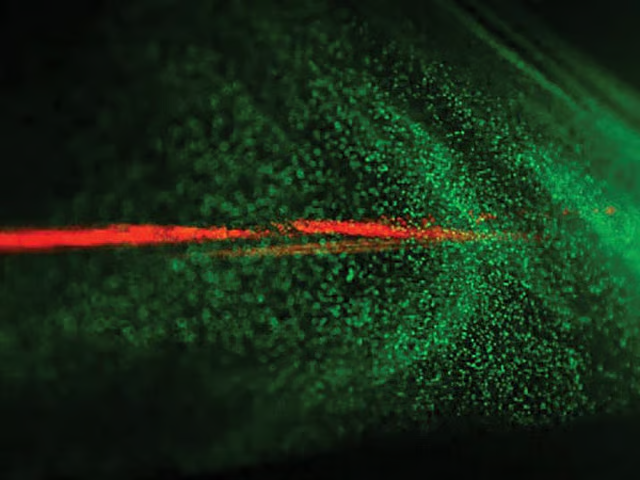
Laser-induced rainfall is based on the idea that intense, ultra-short laser pulses can influence atmospheric conditions. When directed into the atmosphere, these pulses create plasma channels — ionised pathways similar to miniature lightning—that may trigger localised processes conducive to precipitation.
"Ultra-short laser pulses can influence atmospheric conditions. When directed into the atmosphere, these pulses create plasma channels — ionised pathways similar to miniature lightning—that may trigger localised processes conducive to precipitation"
Traditional cloud seeding has relied for decades on dispersing chemical agents, such as silver iodide, into clouds to encourage rainfall. Our laser-based approach aims to provide a more precise, controllable, and chemical-free alternative. This significantly reduces environmental and health concerns while potentially improving efficiency.
What stage has the project reached so far?
The research began with simulations and controlled laboratory experiments to evaluate whether lasers could induce atmospheric modifications that enhance precipitation. The next phase involves field trials using a Mobile High-Power Pulsed Laser Demonstrator (MHPPLD), equipped with advanced remote sensing technology.
This mobile system allows us to test the concept across multiple locations and atmospheric conditions. Researchers will study how different laser parameters—such as pulse duration, energy, repetition rate, and wavelength—affect the formation of laser filaments and their interaction with clouds. We are also investigating beam-steering techniques to create turbulence inside clouds, which could further promote rainfall formation.
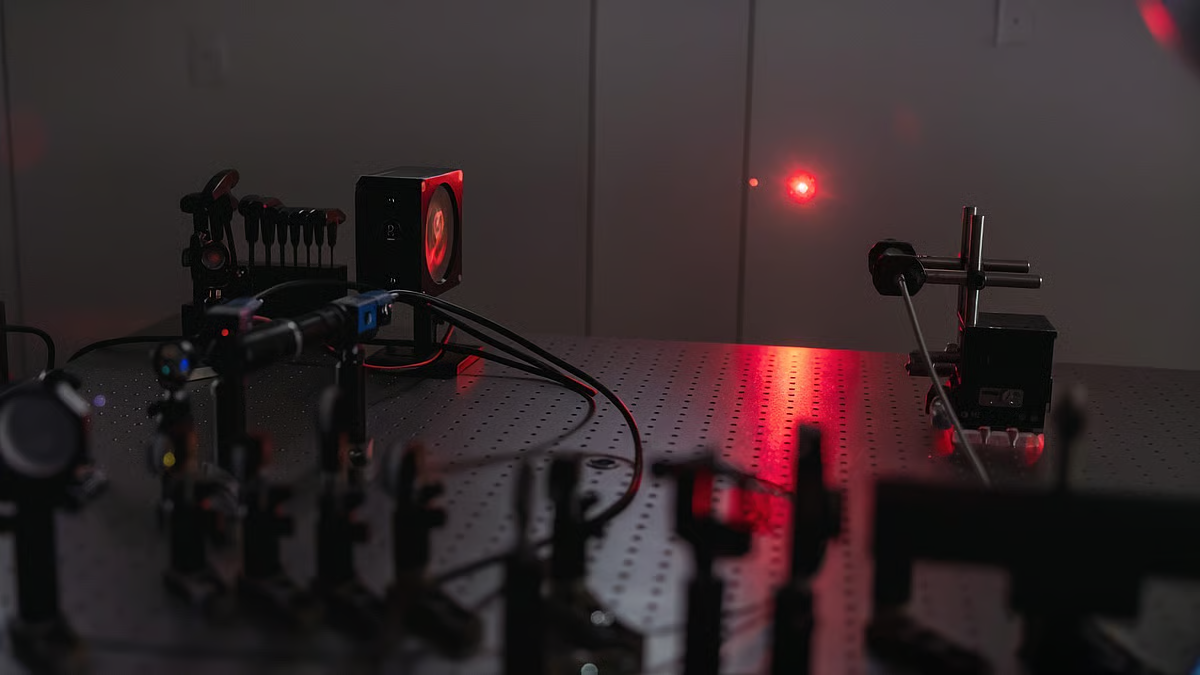
Researchers will study how different laser parameters—such as pulse duration, energy, repetition rate, and wavelength—affect the formation of laser filaments and their interaction with clouds
Who is leading the initiative, and what role does TII play?
The project is led by Dr. Guillaume Matras, Senior Director at TII’s Directed Energy Research Center. It benefits from TII’s advanced research ecosystem, multidisciplinary expertise, and state-of-the-art technology platforms.
Beyond scientific development, the grant will support the establishment of atmospheric and laser science laboratories at TII and partner universities across the UAE. This will enable students to conduct experimental research for graduate and doctoral programs, strengthening national scientific capacity.
We also plan to deliver specialized workshops and seminars covering cloud microphysics, LIDAR (Light Detection and Ranging), plasma diagnostics, and environmental monitoring to foster knowledge transfer and continuous education.
What could be the long-term impact of this technology?
The implications are substantial. If successful, laser-based rain triggering could transform water resource management, improve drought resilience, and support agricultural productivity — particularly in arid and semi-arid regions like the United Arab Emirates.
This research represents a major step forward in weather modification science. By enabling more sustainable rainfall enhancement without chemical dispersal, it aligns with global environmental priorities while addressing one of humanity’s most pressing challenges: water security.
The UAEREP grant underscores the UAE’s commitment to advancing innovative solutions with global relevance. Our goal is not only to benefit the region but to contribute to international efforts to combat climate change and water scarcity through cutting-edge science.