








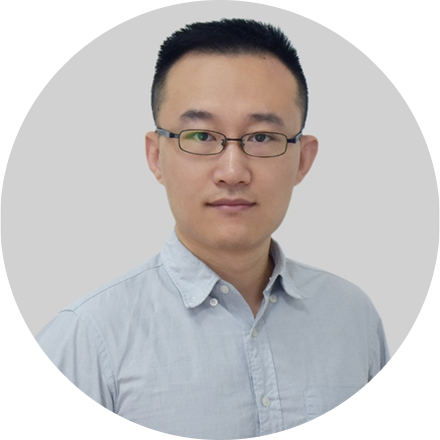
Dr. Fei Yan
Division of Quantum Computation – Beijing Academy of Quantum Information Sciences (BAQIS)
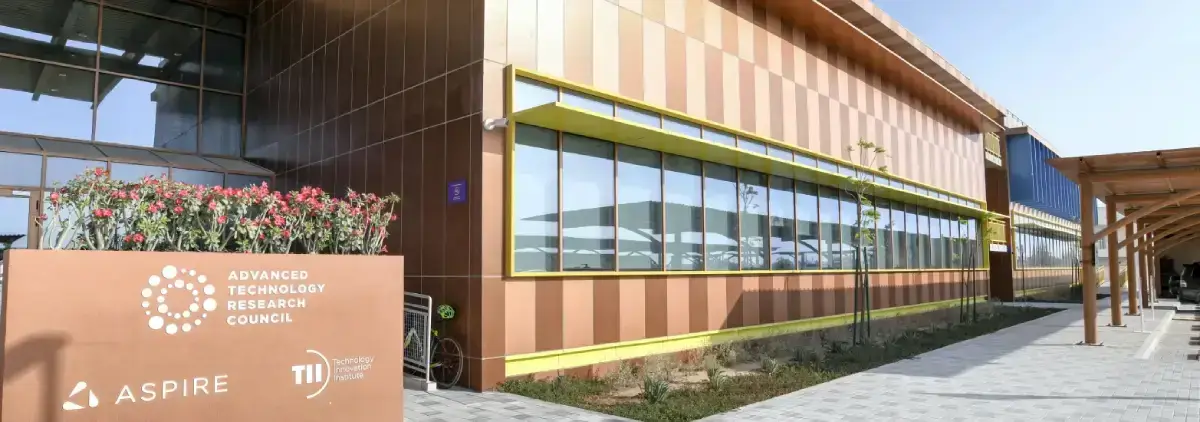
Venue: Wave Auditorium, Masdar Office
2nd March 2026, 3:00PM - 4:00PM (GST)
| Title: | Efficient Implementation of Arbitrary Two-Qubit Gates using Unified Control |
| Abstract: | The set of quantum logic gates that can be easily implemented is fundamental to the performance of quantum computers, as it governs the accuracy of basic quantum operations and dictates the complexity of implementing quantum algorithms. Traditional approaches to extending gate sets often require operating devices outside the ideal parameter regimes used to realise qubits, leading to increased control complexity while offering only a limited set of gates. Here, we experimentally demonstrate a unified and versatile gate scheme capable of generating arbitrary two-qubit gates using only an exchange interaction and qubit driving on a superconducting quantum processor. We achieve high fidelities averaging 99.38% across a wide range of commonly used two-qubit unitaries, enabling precise multipartite entangled state preparation. Furthermore, we successfully produce a B gate, which efficiently synthesizes the entire family of two-qubit gates. Our results establish that fully exploiting the capabilities of the exchange interaction can yield a comprehensive and highly accurate gate set. With maximum expressivity, optimal gate time, demonstrated high fidelity, and easy adaption to other quantum platforms, our unified control scheme offers the prospect of improved performance in quantum hardware and algorithm development. |
| Bio: | Fei Yan received his bachelor's degree from Nanjing University in 2008 and his Ph.D. from the Massachusetts Institute of Technology (MIT) in 2013. From 2013 to 2018, he served as a postdoctoral researcher at MIT's Research Laboratory of Electronics. Throughout the time at MIT, he focused on advancing control techniques and investigating noise properties in superconducting qubits under the guidance of Professors David Cory, Terry Orlando, William Oliver, and Simon Gustavsson. Prior to joining the Beijing Academy of Quantum Information Sciences (BAQIS) at the end of 2022, he was an Associate Research Scientist at the Southern University of Science and Technology. Currently, he leads the superconducting quantum computing team at BAQIS, where his research is centered on developing scalable superconducting quantum systems and related enabling technologies. |